

The flower of Hypericum calycinum
Or Great St. John's Wort
As I walk around campus and town each day at noon, I often pass between the UI Swim Center and the Memorial Gym. There is a patch of magnolias there...and not just the trees, but another member of the magnolia family decorates the ground on either side of the sidewalk. It took me a few years to find out what it was, but finally one day one of the UI landscape folks was in that area and I asked. He said it was St. John's Wort.
Now, I'm a newbie, but even I have heard of St. John's Wort. I knew it is often used in herbal medicine to treat depression and it has some scientific backing for its claim although it takes longer to work then man-made concotions like Prozac. I don't get depressed too often, but I have had some depression in my day and I have indeed used St. John's Wort for a time. It seemed to help.....but Prozac sure works better.
Regardless, I'm not interesting in SJW for its medical use like most folks. I think it is a gorgeous, if potentially invasive, groundcover. Why is it called St. John's Wort, did St. John discover it or something? Again, although a newbie, I already knew that many plants with Saint's names, like the Michaelmas daisy for example, tend to bloom or be ready to harvest on or near that Saint's day.
St. John in this case is referring to that biblical classic, St. John the Baptist. Reputed to be the cousin of the big JC and a guy who lost his head and got it served up on a platter. (Yes, my bible knowledge is lacking too. so be it.) Apparently, he was born at the end of June--June 24th. Of course, this is from the same church that tells us Jesus was born on December 25th. Ummm, maybe or maybe not. But I'm not here to debate bible fact vs fiction. St. John the Baptist's Saint's Day is June 24th and it just so happens that his wort is ready to harvest at that exact same time.
Wort? Wort is an ancient word with a sketchy lineage. It might come from the old English word Wyrt, which just means plant. Or Wyrt might also come from the old German world wurtiz which is now wurzel and means root. There are a zillion "worts" out there.
The connection between this family of wort and the Catholic Church is interesting and can be found in the scientific classifications.
Kingdom: Plantae---got it
Division: Magnoliophyta---Flowering plant
Class: Magnoliopsida--of the magnolia class
Subclass: Rosidae--like the roses
(unranked): Eurosids I--- back to that seed having two leave. I finally understand that! When it starts to grow, it puts out two leaves!
Order: Malpighiales---I haven't quite got this part yet. It is a huge order of flowering plants 16000 species
Family: Clusiaceae--typically a milky sap plant and sometimes (not always) it will produce resin instead of pollen
Genus: Hypericum--keep reading
That is where it is interesting. "Hyper" means above and "icum" comes from eikon which means picture. Apparently some members of the Hypericum genus, like St. John's Wort used to be hung above religious icons and pictures in household to ward off evil. Excellent. Now we are talking MAGICKAL references!
At the moment, of course, St. John is not flowering, we are nowhere near June 24th, but the leaves are still mostly green, some a brownish. and the hope of the new growth is evident.
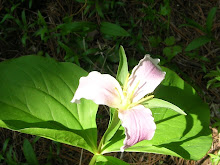
Since St. John's Wort comes in so many varieties, I'll have to investigate much more to see what kind we have. I think it looks very close to this one. Hypercium uralum. (ura---bear?? ummm)



No comments:
Post a Comment